Inspired by Unsettling Data? Have questions, insights, eureka moments or frustrations as you read? Contribute to the_annotated_version !
Experiment in aesthetics
Scholarly and legal writing is typically structured through unemotional, passive, argumentative and linear aesthetics. This dry progressive aesthetic apparently gives scholarly writing its authority or legitimacy by virtue of being dispassionate or ‘objective’ (a.k.a. not polemic).
Many now mourn that we live in a post-truth and anti-intellectual world. But what if this death were a gift, a portal? What may scholarly and academic writing be like when it travels beyond Enlightenment aesthetics? In the age of quantum entanglement, hiveminds, simultaneous hyperconnectivity and hyperisolation in the backdrop of rising authoritarianism and innovative movements against it, how do we find the middle ground between the passions and the interests, between anxiety and avoidance? What aesthetic of writing finds legitimacy in this place? What does research mean here and what scholarly aesthetic shall feed this world?
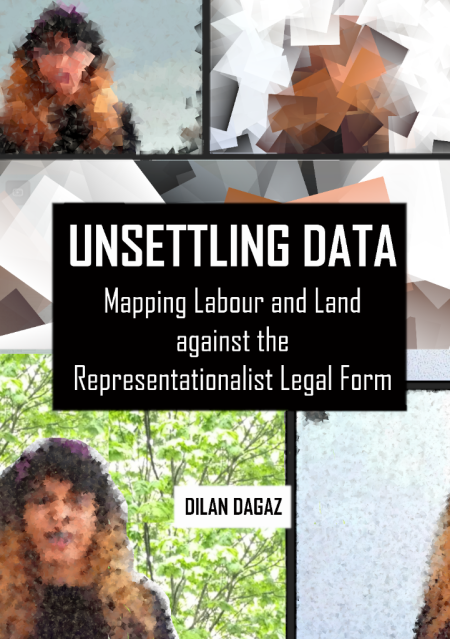
Join me in a zany experiment to grapple with these questions through Unsettling Data the_annotated_version. Let’s break up and break down the linearity of scholarly and mainstream legal writing and experiment with ideas of legitimacy, authority, reading and writing practices. The hope is that instead of staying a static artefact, Unsettling Data becomes more of a living collaborative conversations that expand and deepen over time.
Think palimpsests, polyvocality, patchwork, playing with footnotes and endnotes, and colourful third-hand journals doodled on and collaged through several generations. That’s our vision!
What to submit
All academic or artistic interventions, critical or creative notes, anecdotes, intellectual and emotional rants and scholarly questions from the readers of Unsettling Data are welcome. The tone can be formal or informal. Apart from academic questions and comments, we also welcome (linear and nonlinear) thoughts, daydreams, and speculative directions inspired by the book that travel into artistic realms like maps, mindmaps, doodles, poetry, visual musings and other ways of expression and annotation that have not yet crossed our awareness.
Selected contributions shall be attributed and featured with refractions from the author as part of Unsettling Data the_annotated_version under a Migrantifa Commons BY-NC license.
How to submit
Email to dilan (at) theunsettlingwitch (dot) com with subject line “Contribution for the_annotated_version”
For notes and written comments: Email as .doc or .odt attachment
For margin doodles, scanned notes/pages, other artwork: Email as .pdf or .png attachment
Timeframe
Deadline to send in your contributions: 30th November 2026
Early 2027: Publication with Discussion Event
Leave a Reply