In spiritual and religious discourse, much ink has been spilled on consciousness. This is influential in certain contemporary alternative therapy practices, eg. in how modern iterations and trainings of past life therapy have also been structured—the frameworks of consciousness and the subconscious have serve as the basis of contemporary trainings and sensemaking of past lives/other lives.
On the other hand, the discourses of magic and witchcrafts, though featuring intention, barely seem to grapple with the ideas of consciousness and the subconscious, which typically derive from religious, spiritual, and most recently, psychoanalytical perspectives of the mind. Why is that? More importantly, what are the implications of these difference of attitudes towards consciousness between spiritual/religious/psychoanalytical discourses on the one hand, and magic/witchcrafts discourses on the other?
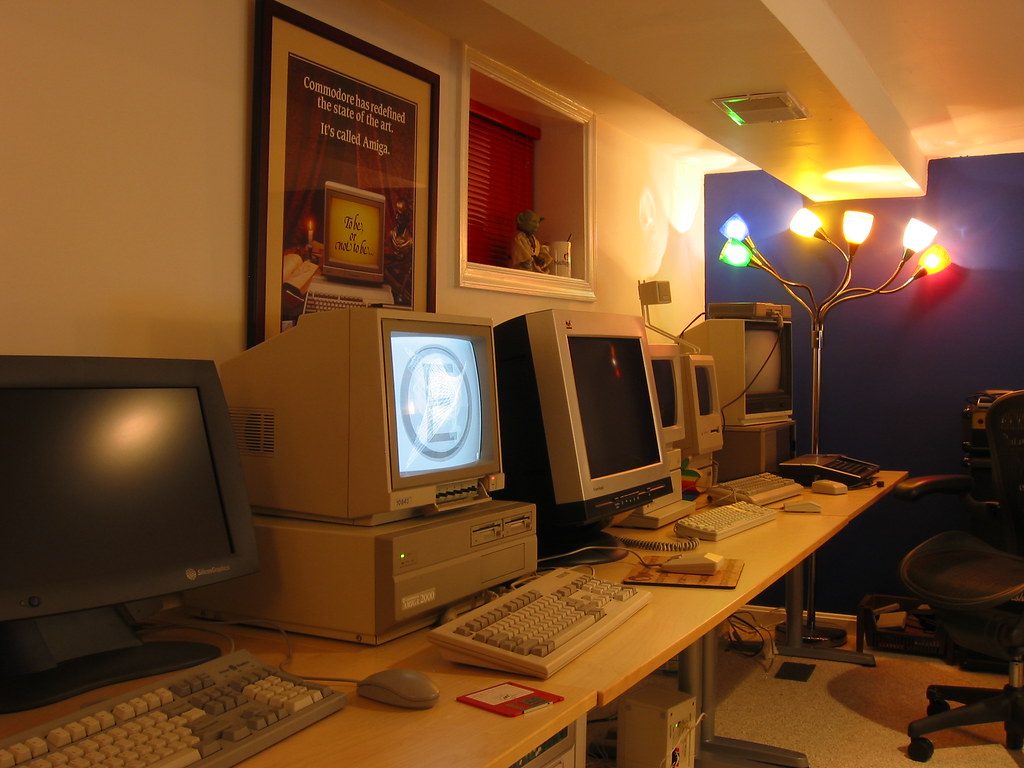
Some answers to these questions are most definitively found in the influence of the cybernetics movement on ideas about the mind and computation by the middle of the 20th century. As Orit Halpern outlines in Beautiful Data, the post-War cybernetic influence that evolved with figures like Warren McCulloch, Leon Festinger, Gregory Bateson, shifted the terms of engagement with the mind and the self from consciousness to cognition and communication, initially in the fields of engineering, psychology and psychiatry.
In the almost century since, as technology like AI is built upon these models of the mind and the self, this shift has spilled more widely to shape popular “common-sensical” understandings and cultures, while helping de-pathologise experiences of schizophrenia and psychosis at a wider level, and even legal norms and claims, reframing them as issues of communication and cognition; rather than of consciousness. In academic discourses, this cybernetic influence has also marked a shift from the obsession with objectivity and representation to a more sustained focus on discourses of performativity and responsiveness. Even in popular online and social media magic and witchy discourses, computational metaphors become common, as spiritual “downloads” are received and “circuits” are connected.
While oft contextualised against the evolution of computational technologies, in the age of accelerated climate change and planetary changes, this discursive shift of the last 100 years from consciousness to communication is not unremarkable. It is worth paying particular attention to this shift not just from the perspective of technology and engineering, but also from the wider lens of Earth placetimes and environmental evolution. We are at a precipice of great changes, atleast here on Earth; anyone with any sort of awareness cannot dispute it anymore. And with changes come the failures of existing frameworks, the need to understand, and perhaps even a return to what had been discarded before as “superstition.” The general regenerated interest in religion, magic, spirituality, and beyond the seen that is being experienced now is certainly proof of this. But how we shall relate to these changes shall also depend on how we understand ourselves, how we are willing to understand ourselves, what we are willing to accept. And for that, we need stories about the shifts before us. This is what I offer here, as we remember the lore of the Great Unsettling.
The problem of the mind has always been a problem of existence. “who am i,” “what am i,” “what am i doing here,” the mind asks amidst suffering and questions of the self and the other, and eventually, of power and responsibility, arise. And hence, religion, magic, and law. The Age of Enlightenment sought to answer this problem of the mind with reason, with certitude. “i” am consciousness, it said. “i think, therefore i am,” was the influential Cartesian model of the mind which permeated much of this age. In other words, the mind was conscious, the mind was consciousness. This was the age of industrial revolution, colonialism, and slavery, because in thinking, the mind sought expansion (the age of discovery!), and subsequently, control of the territories into which it expanded.
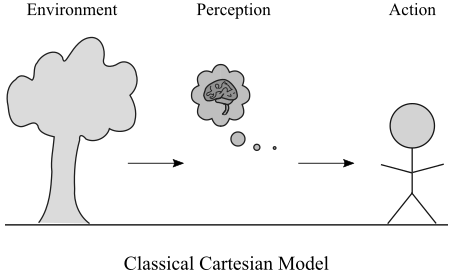
In the Age of Enlightenment, the mind a.k.a. self a.k.a. “i” was also individuated, it existed as an individual. As a result, this age saw great stress on individual freedoms, including freedom of thought and individual rights, and simultaneously, great wariness of woo-woo Eastern traditions that decentred the individual and felt like conformity and mind control. At the peak of the Age of Enlightenment, the mind was conscious, the spiritual aspiration was consciousness (hence, the emergence of objectivity i.e., perfect knowledge, as a desirable value). And consciousness was modelled and existed as individual, free from the restraints of others. And such individuation also allowed for the possibility of collectives (a collection of individuals). So in the Age of Enlightenment, we also see the emergence of some extremely influential collective forms, including the great companies, the LLC, the syndicate and the union.
Over the last 100 years or so, however, these values have fallen flat. The two wars Europe fought around the world in the 20th century, the horrors of slavery and genocide, and increasing environmental decimation meant that the solution of individuated consciousness offered by the Age of Enlightenment to the question of who we are, what the mind is etc., has rung hollow. “Are we not more than this?,” some ask optimistically; others are more prone to accept the story of “humanity is a disease; therefore, being human, i must be the disease;” and logically, sink into depression and suicide; in many, the two states live simultaneously.

But after this Age of Enlightenment, where the arrogance of knowledge, of being enlightened prevailed, an age of magic and wonder is returning. Perhaps the mind is not individuated, some are saying, as they remember and grapple with the unsettling teachings of Indigenous Peoples around the world. An increasingly popular acceptance of psychedelic trips, and legalisation of marijuana, mushrooms, and some other psychotropic plants seems to support this expansion of the idea of the mind, of consciousness, of the self and awareness, beyond the individual. Interest in Eastern religions and philosophies grows. It is still scary territory, but there is more openness to it. On the other hand, the idea of control has also been reformulated in magical terms— reflections, refractions, feedback mechanisms through which the mind makes and remakes itself, and there is a physiological or material basis to it; neurological pathways, fascia, the land, you name it. We are eager to root the mind materially now, rather than keep it in the realm of the abstract and the spiritual. From engineering and psychiatry, this model of the mind is rooted in cognition, rather than consciousness.
It is the coming together of these two threads—of scepticism around individuated consciousness, and of the rooting of the mind in materiality (a..k.a. a body)— which truly consolidates our entry into the Age of Magic in the middle of this 21st century. Unlike Abrahamic religions (and some non-Abrahamic ones), magic derives its power from the collapsing of the categories of the spiritual and the material into each other; and also, magic looks beyond ideas of individuated or collective human consciousness into more-than-human agential possibilities and performativity (in the Austinian sense). Both these ingredients are present now with some openness; and I believe, examining trends in popular culture, that there is more curiosity about these ingredients now than fear.
Of course, this entry into the Age of the Magic provides no “solution” or definitive “healing” for existential suffering, but it is certainly a new landscape that we are travelling now; it is different from what’s been past. The questions have changed. We are now approaching the mystery of existence through an entirely different direction. So systems, institutions, knowledge systems, economies, politics, and law will eventually change. As usual, contestations and conflicts remain and shall remain, because they are what make existence zesty;) Par example, contestations around “if consciousness is not individuated, then what is it?”, “if there is no individuation, what happens to the distinction between the self or the other?”, “if there is no distinction between the self and the other, how do we take responsibility?,” “in what body is the mind rooted? can that body be engineered? should that body be engineered and optimised?,” “how does that choice of the body influence availability of food, water, homes, and pleasure?” “is consciousness an obsolete question in the face of ai?,” “is race, racialism, gender, and speciesism a byproduct of the consciousness or cognitive model of the mind?,” “if there is no objective truth, what’s the point? what can and should we build with partial knowledges and subjectivity” etc. No easy answers, but if the answers were easy, why would there be magic? 🙂
Leave a Reply